
Welcome.
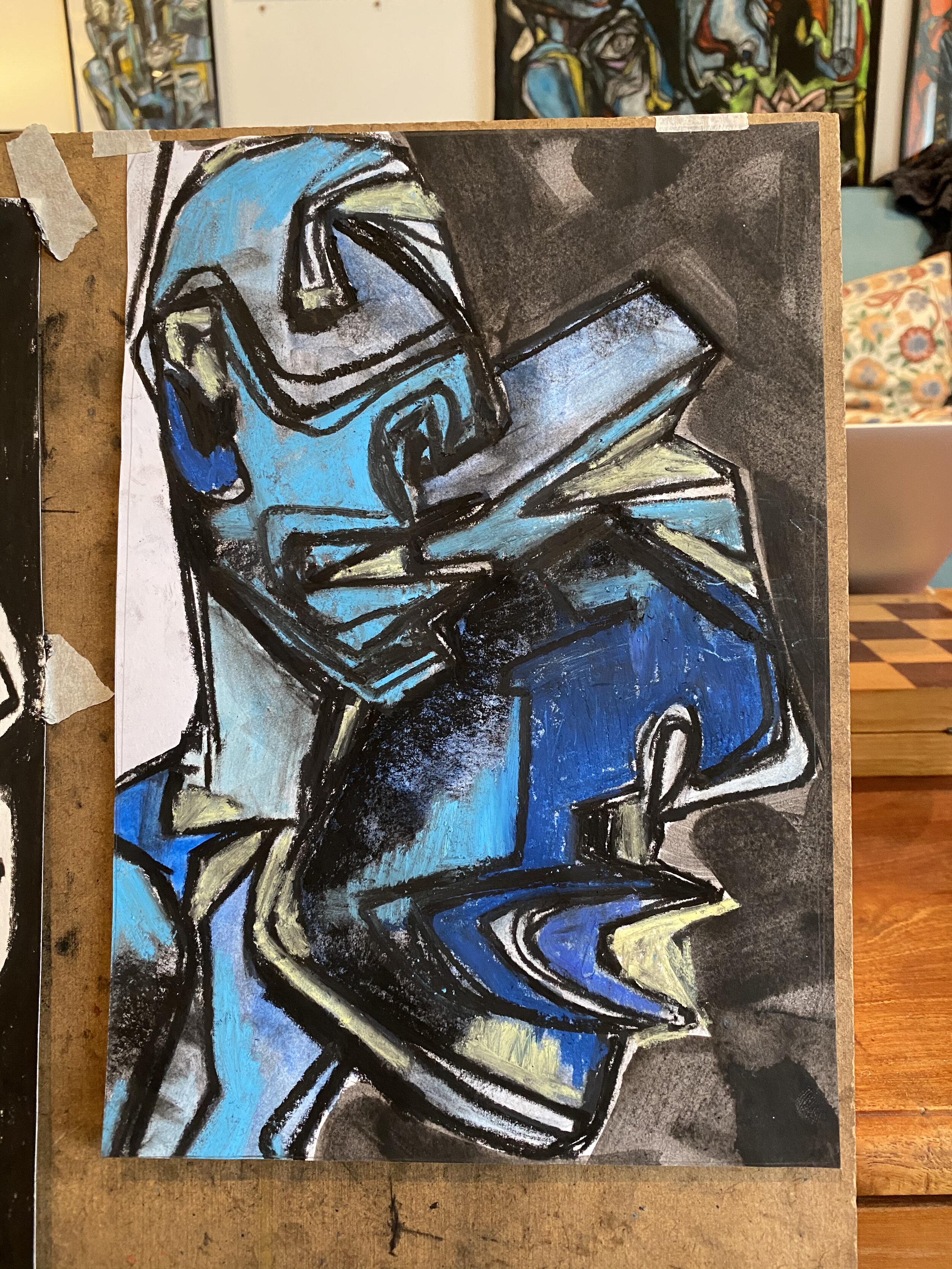
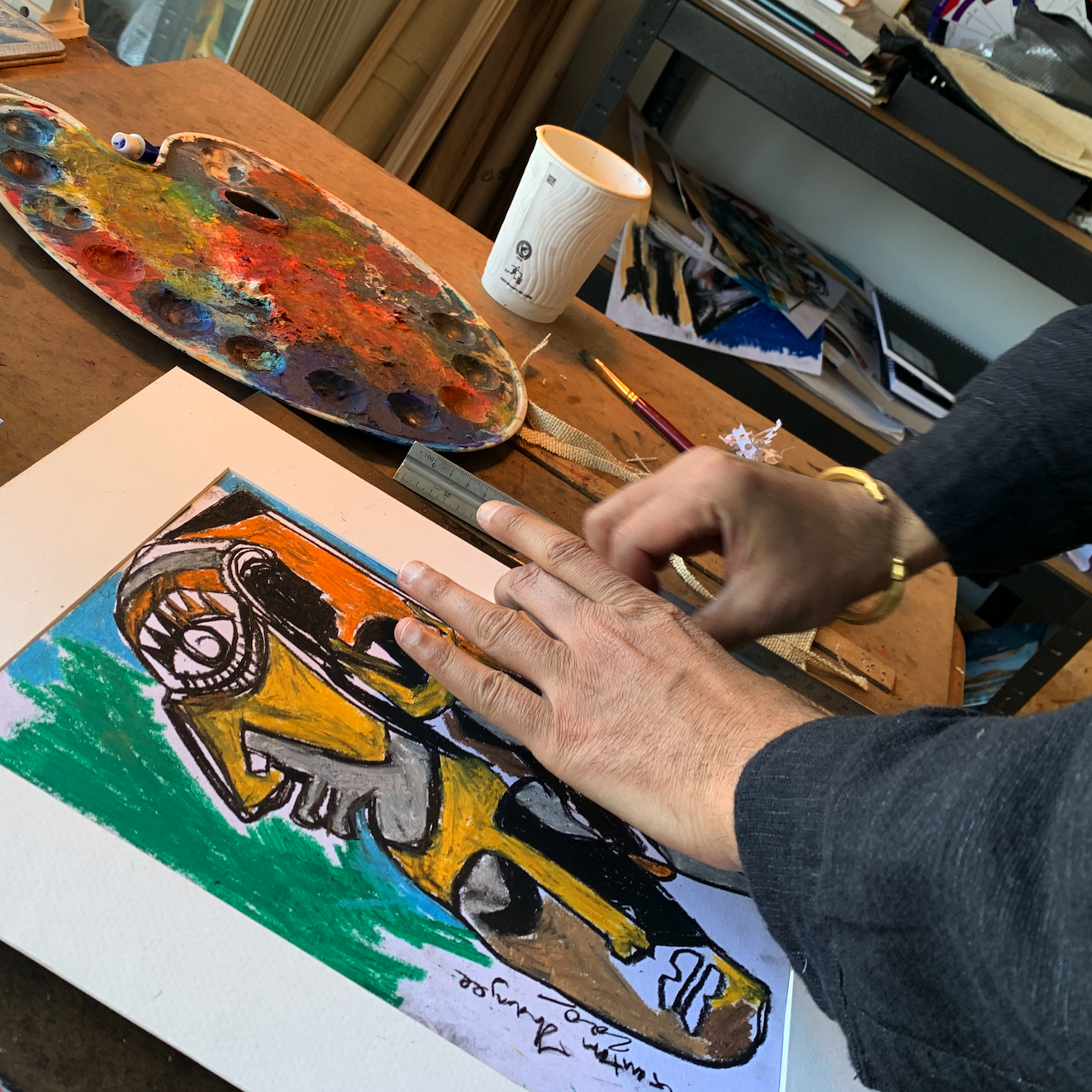
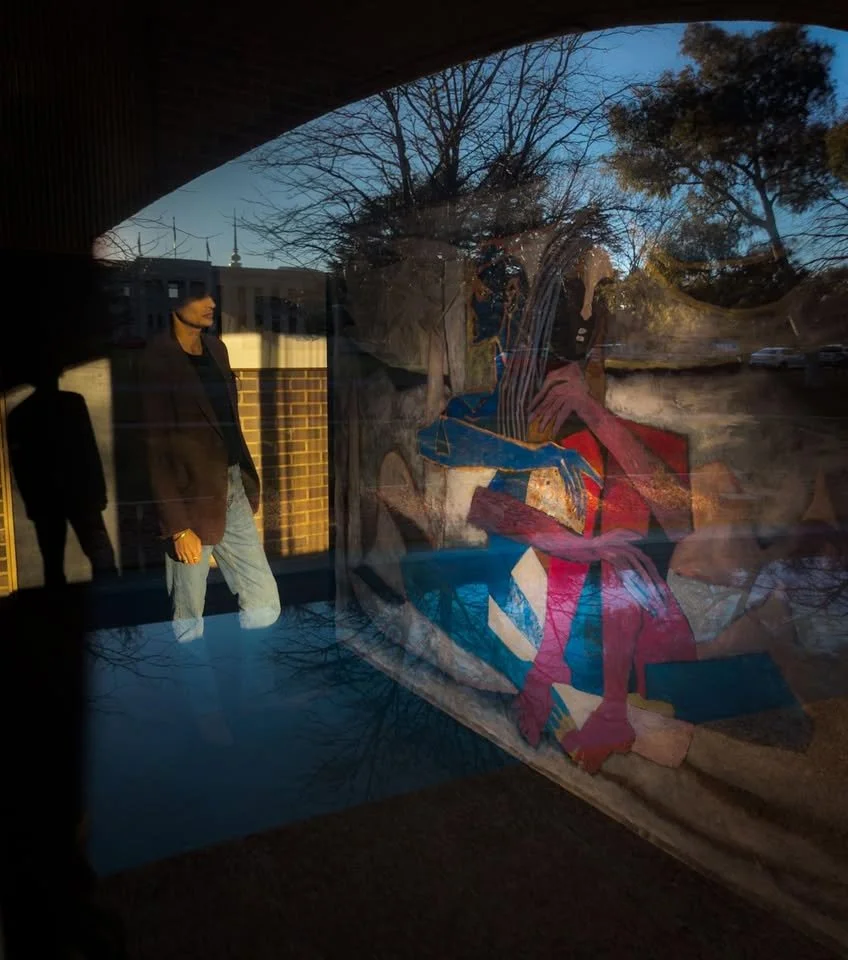
I make large-scale symbolic paintings drawing on myth and sacred imagery for civic, cultural, and contemplative spaces.
The work draws on myth, sacred imagery, and the symbolic traditions of many cultures, with an interest in the recurring forms and images that appear across cultures, religions, and epochs.
Many projects take the form of site-responsive installations, with paintings presented directly in relation to architecture, landscape, and atmosphere. The mode of display — cloth, scale, suspension, and setting — forms an integral part of the work.
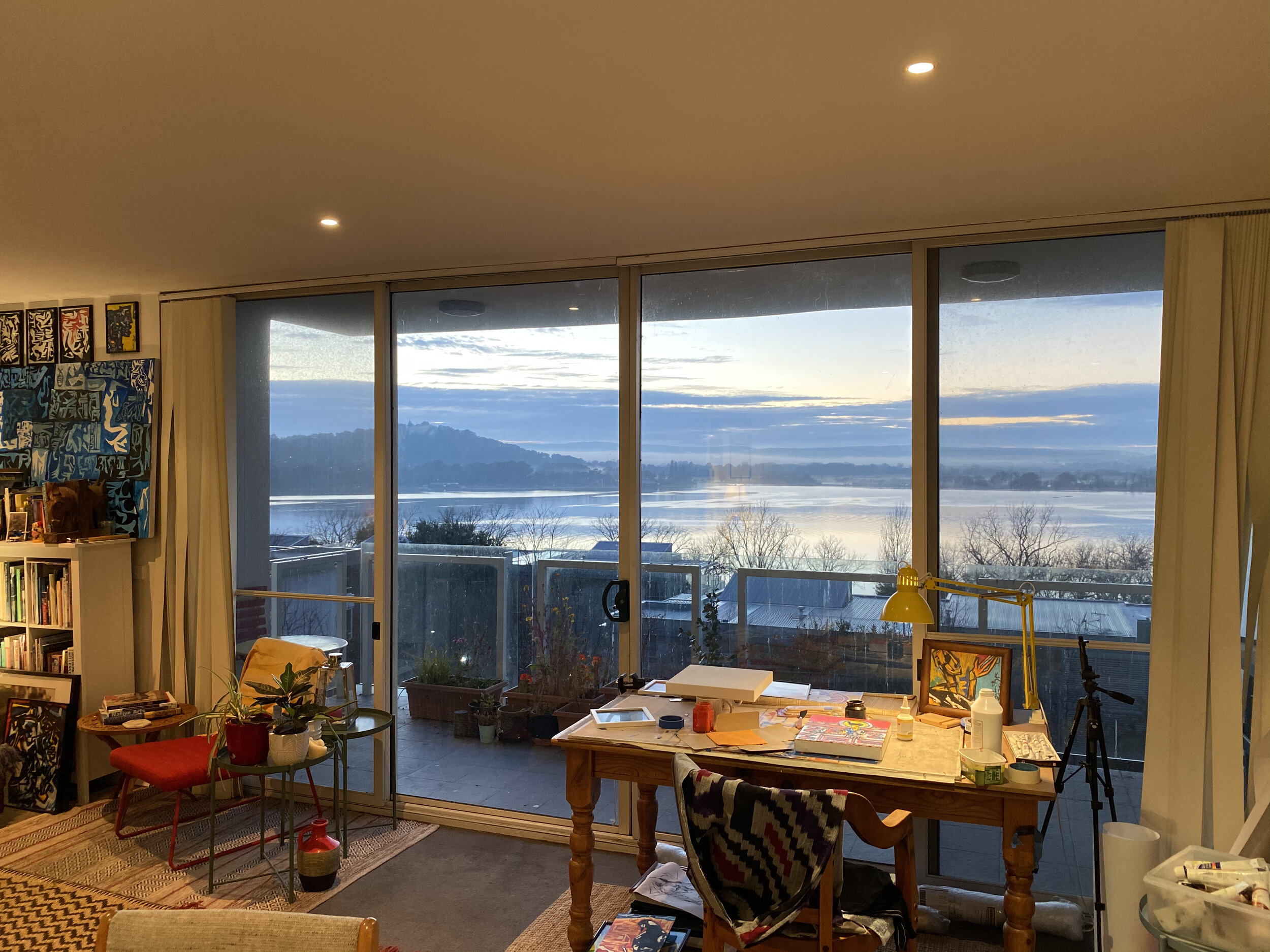
I live and work in Canberra, Australia.
Recent projects include Goddess with a Thousand Faces, a solo exhibition in Canberra, and Expanse, a site-specific installation at Mount Stromlo Observatory. My work has also been shown in India, including through the India International Spiritual Art Festival, and is available through Gallery 78 in Hyderabad, India. Writings and interviews have appeared through journals, podcasts, radio, and cultural publications in Australia and internationally. Upcoming projects include a residency and exhibition period in Santiniketan, West Bengal.
Before dedicating myself fully to painting, I studied and practised architecture in the UK.
WELLSPRING
These are some of the sources that have shaped the work over time.


Dante’s Divina Commedia
I have found Dante’s Commedia fascinating as a perfect allegory of the classic spiritual journey and integration of various aspects of the psyche. Rich with archetypes, the Commedia is an essential cornerstone of Western Civilisation coming out of the medieval period. It begins with these words,
“At the midpoint of the path through life, I found
Myself lost in a wood so dark, the way
Ahead was blotted out.”
From my Clive James’s Translation, Picador Poetry, 2013
I especially love the final line of Canto 33 of Inferno, just before the start of Pergatoria:
“And then we saw the stars again”.
I made a painting of this moment in inks and acrylics on Italian paper in 2021. Click here to view the artwork.


Astrology
The stars and planets have shaped the symbolic imagination of cultures across the world for thousands of years.
I have long been interested in astrology as a symbolic language — one that links the rhythms of the heavens with cycles of inner and collective life.
Alongside painting, I occasionally study and create astrological charts using both Vedic and Western traditions.
“"The signs of the zodiac are an image of the collective unconscious, each sign corresponding to a specific archetype that influences human behaviour and experiences." - Carl Jung
A related newsletter article exploring dreams, astrology, and historical cycles can be read here.


Carl Gustav Jung
Few thinkers have shaped my work more deeply than Carl Jung. His explorations of dreams, mythology, religion, symbolism, and the structure of the psyche opened a way of understanding images not merely as aesthetic forms, but as living expressions of inner and collective life.
I have found particular value in Jung’s writings on archetypes, alchemy, synchronicity, the collective unconscious, and the symbolic function of myth and religious imagery.

Joachim of Flora
I first encountered the writings of Joachim of Flora through Carl Jung’s Aion. His vision of history unfolding through successive spiritual ages — the Age of the Father, the Son, and the Holy Spirit — has remained deeply fascinating to me.
I am especially interested in Joachim’s symbolic understanding of time, history, and spiritual transformation, as well as the broader Christian tradition of eschatology and apocalyptic imagination.


Indian Civilisation
I was born in India in 1980, and the symbolic and civilisational atmosphere of that world has remained deeply important to me. Though I have lived in several places and come from both Indian and European heritage, Indian philosophy, mythology, and sacred imagery continue to shape my work and inner life.
"India is a place where philosophy is not just thought, but lived." Aldous Huxley


Da Vinci’s Last Supper
I have long been fascinated by Leonardo’s Last Supper — not only for its extraordinary technical mastery, but for the sense that it stands at a threshold between worlds.
The work unites the spiritual atmosphere of Christianity with the emerging rational and perspectival vision of the Renaissance. At its centre is the stillness of Christ, around whom a field of human emotion and movement unfolds.

Pierre Teilhard de Chardin
Teilhard de Chardin’s The Phenomenon of Man made a lasting impression on me when I first encountered it. His attempt to reconcile science, evolution, and spiritual development remains deeply compelling.
I am especially drawn to his vision of humanity moving toward greater consciousness and unity — what he described as the Omega Point.
"Someday, after mastering the winds, the waves, the tides, and gravity, we shall harness for God the energies of love, and then, for the second time in the history of the world, man will have discovered fire."

Rabindranath Tagore
Few figures embody the breadth and spirit of Indian civilisation more completely than Rabindranath Tagore — poet, artist, philosopher, educator, and Asia’s first Nobel Laureate.
I have long been drawn to the unity of poetry, spirituality, nature, and culture in his thought and work.
“WE STAND BEFORE this great world. The truth of our life depends upon our attitude of mind towards it…”
“It guides our attempts to establish relations with the universe either by conquest or by union…” Tagore from The Religion of the Forest

Caravaggio
Master of darkness and illumination through chiaroscuro.
Figures emerge from shadow into light against immense black voids.

The Crusader Bible
I have long been drawn to medieval illuminated manuscripts.
The Crusader Bible has an extraordinary sense of colour, movement, and symbolic intensity. Each page feels both sacred and martial.


Iconography
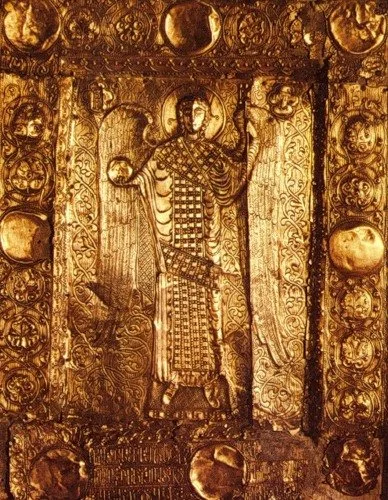
I find Christian iconography powerful for its symbolic clarity and spiritual gravity.


Epochs and the Long Cycles of History
Cyclical views of history and civilisation have been a longstanding interest in both my reading and painting.
Ecclesiastes 1:4-7:
"A generation goes and a generation comes, but the earth remains forever. The sun rises and the sun goes down; it hurries back to the place where it rises. Blowing toward the south, turning toward the north, the wind returns; it shifts about continually and returns again to its circuits. All rivers run to the sea, but the sea is not full; to the place where they run, the rivers keep running."